

Red Meat and Chronic Disease in Hmong Health
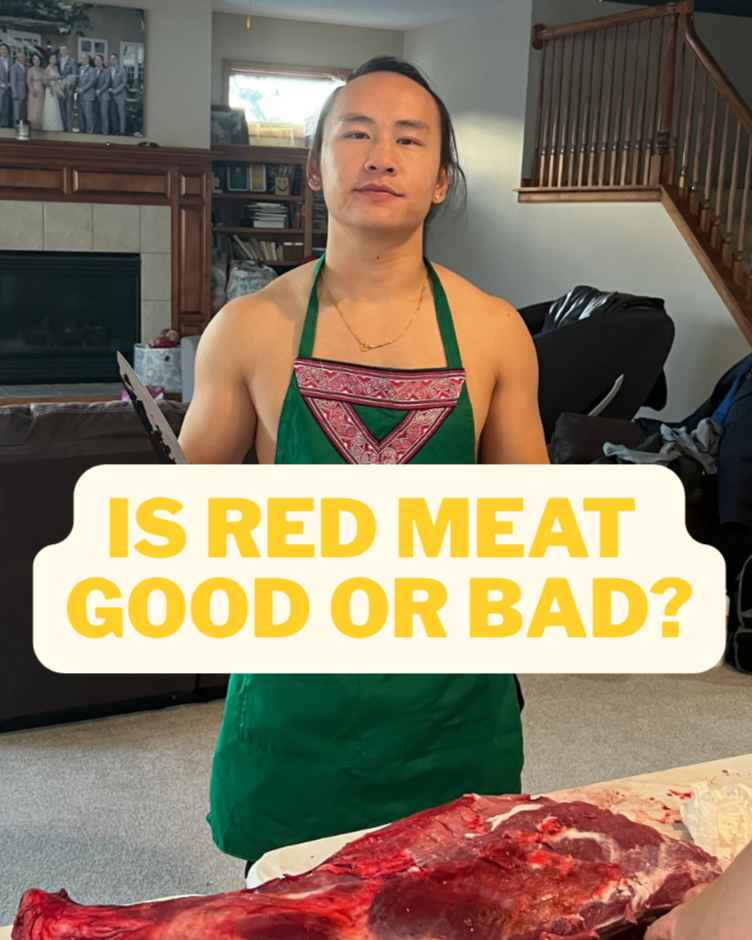
Red meat and chronic disease is an important discussion within Hmong health, especially as rates of heart disease, type 2 diabetes, colorectal cancer, and gout continue to affect many Hmong families. As access to meat increased after immigration to the United States, dietary patterns shifted — and so did cardiometabolic risk.
This article explores red meat intake, portion size, and frequency, and how they relate to health risks such as heart disease, diabetes, colorectal cancer, and LDL cholesterol levels within the modern Hmong diet.
Red Meat, Prosperity, and Dietary Shifts
Historically, red meat was not consumed daily in many Hmong communities. Access depended on geography, income, and livestock availability. Meat could symbolize prosperity, celebration, and strength.
After immigration, red meat became inexpensive, abundant, and easily accessible year-round. What was once occasional became routine.
In many households, serving generous portions of meat reflects hospitality and care. That intention matters. But increased accessibility, larger portions, and reduced physical labor have altered the overall health equation.
This shift is not cultural failure. It is environmental change.
Chronic Disease Patterns in Hmong Communities
Heart disease, type 2 diabetes, and gout are common concerns in many Hmong families. Colorectal cancer risk has also emerged as an important public health issue in Asian American families.
Multiple factors contribute:
Genetic predisposition
Visceral fat accumulation
Lower muscle mass at lower BMI thresholds
Dietary shifts toward higher saturated fat intake
Reduced fiber intake
Reduced physical labor compared to earlier generations
Higher intake of red and processed meats has been associated with increased risk of:
Cardiovascular disease
Elevated LDL cholesterol
Colorectal cancer
Type 2 diabetes
The key variable is not presence, but pattern.
What Research Says About Red Meat and Heart Disease
The research on red meat and heart disease is nuanced. Unprocessed red meat in moderate amounts does not carry the same risk profile as processed meats such as sausage, bacon, or deli meats. Processed meats show stronger and more consistent associations with:
Colorectal cancer risk
Cardiovascular disease
Type 2 diabetes
Risk appears dose-dependent. That means:
Larger portions increase exposure to saturated fat and heme iron.
Higher frequency increases cumulative metabolic stress.
Lower fiber intake amplifies LDL cholesterol response.
In clinical practice, I often see that the issue is not occasional red meat. It is red meat at most meals, larger portions, higher-fat cuts, limited protein rotation, and minimal vegetable intake.
You do not need to eliminate red meat. But frequency, portion size, and saturated fat exposure are not neutral variables — especially in the presence of elevated LDL or cardiometabolic risk.
Saturated Fat and LDL Cholesterol
Red meat contributes saturated fat, which can raise LDL cholesterol in susceptible individuals. For people with elevated LDL or strong family history of cardiovascular disease, even moderate increases can matter. Monitoring lipid panels should guide intake decisions more than blanket rules.
Processed Meat and Colorectal Cancer Risk
Processed meats consistently show stronger associations with colorectal cancer compared to unprocessed red meat. Frequency appears to matter more than occasional inclusion. Limiting processed meat consumption is one of the most evidence-supported adjustments for long-term colorectal cancer risk reduction.
When Red Meat Can Fit Into a Healthy Pattern
Red meat may be appropriate when:
Iron deficiency anemia is present
The individual engages in regular physical activity
Lipid panels are normal
Portions remain moderate
Protein sources are rotated
Lean cuts and mindful portions are not equivalent to large servings consumed daily. Context determines risk.
See A Healthy Balanced Plate for more information.
When Red Meat Intake Becomes More Concerning
More caution is warranted when:
LDL cholesterol is elevated
Family history of heart disease is strong
Type 2 diabetes risk is present
Processed meats are frequent
Red meat is the default protein at most meals
Fiber intake is consistently low
In those cases, shifting frequency, reducing portion size, and increasing poultry, fish, tofu, legumes, and plant-based proteins often improves lipid markers and metabolic health over time. One common pattern I see clinically: as financial stability increases, meat portions increase. It can feel like progress. But long-term cardiometabolic health favors moderation over maximization.
Protecting Health Without Abandoning Culture
This is not about removing red meat from Hmong culture. It is about:
Intention over automation
Lab-guided decisions
Portion awareness
Protein diversity
Fiber adequacy
You can preserve food traditions while reducing chronic disease risk. Red meat does not need to disappear. It needs context.
FAQ About Red Meat and Chronic Disease
Is red meat bad for heart disease?
Higher intake, particularly of processed meats, is associated with increased cardiovascular risk. Moderate intake within a fiber-rich diet may fit depending on LDL levels and overall risk profile.
Does red meat increase colorectal cancer risk?
Research shows a dose-dependent association, especially with processed meats. Limiting frequency appears protective.
Is pork healthier than beef?
Both are classified as red meat. Cut, fat content, portion size, and frequency matter more than the specific source.
Do Hmong people need to eliminate red meat?
No. Elimination is rarely necessary. Portion control, protein rotation, and monitoring labs are more evidence-based strategies.
Red meat and chronic disease in Hmong health is not a moral issue. It is a pattern issue.
Changes in access, portion size, and lifestyle have altered risk profiles. Cultural food traditions can coexist with evidence-based health strategies. Longevity is built on moderation, not restriction.
If you are concerned about cholesterol, diabetes risk, or family history and want culturally aware, evidence-based nutrition guidance, I work virtually with adults across Minnesota, California, and several other states. Many clients use insurance benefits for care. You do not have to choose between heritage and long-term health.
Nutrition counseling is often covered 100% by health insurance!