

How Many Calories Should You Eat to Lose Weight?
How many calories to lose weight is one of the most common questions people ask. Closely related is how many calories per day to lose weight, but the answer depends on your body, activity level, and goals.
This article is for adults who want a clear, realistic answer without relying on generic calculators. We’ll break down what a reasonable calorie target looks like, how calorie needs are actually calculated, why they vary, and how to approach weight loss in a way that is sustainable.
How Many Calories Per Day to Lose Weight?
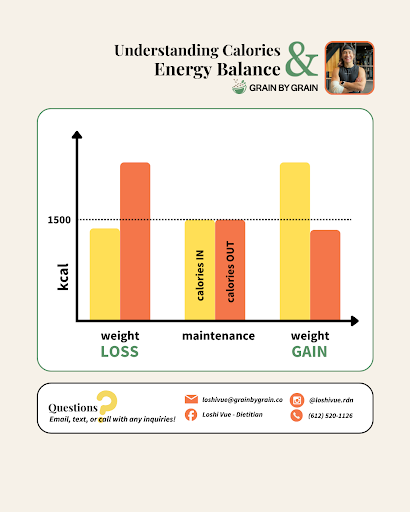
How many calories per day to lose weight depends on your total daily energy expenditure and the size of your calorie deficit. A common starting point is a 300–500 calorie deficit, leading to about 0.5–1% body weight loss per week (roughly 0.5–2 lbs for most people).
How Many Calories Do You Need to Lose Weight?
A practical starting point for weight loss is creating a 300–500 calorie deficit per day, which typically leads to about 0.5–1% of body weight lost per week (or roughly 0.5–2 pounds per week for most people).
For example:
If you weigh 200 lbs → target ~1–2 lbs per week
If you weigh 140 lbs → target ~0.7–1.4 lbs per week
This rate is:
Sustainable
Less likely to cause muscle loss
Easier to maintain long-term
More aggressive deficits can lead to faster weight loss initially, but often increase hunger, fatigue, and the risk of regaining weight.
How Calorie Needs Are Actually Calculated
Calorie needs are typically estimated using equations like the Mifflin-St Jeor equation, which calculates your resting metabolic rate (RMR), then multiplies it by an activity factor to estimate total daily energy expenditure (TDEE). This approach is grounded in principles of energy balance and calorie needs (https://pubmed.ncbi.nlm.nih.gov/15883556/) and is commonly used as a starting point in clinical practice.
This process considers:
Age
Sex
Height
Weight
Activity level
From there, a calorie deficit is applied.
But this is where most people misunderstand the process.
These equations are estimates, not exact prescriptions. General guidance on how calorie needs are determined can provide a useful baseline, but real-world adjustments are almost always needed.
In clinical practice, I often see people rely too heavily on calculators without adjusting for real-life behavior, which leads to frustration when results don’t match expectations.
Why Your Calorie Needs Are Different
Two people can weigh the same but require very different calorie targets.
Key factors include:
Body Composition
More muscle mass increases calorie needs. Two individuals at the same weight can have very different metabolic rates depending on muscle vs fat mass.
Activity Level and NEAT
Daily movement outside of exercise—called non-exercise activity thermogenesis (NEAT)—can vary significantly.
Some people naturally move more throughout the day, increasing calorie expenditure without structured workouts.
Diet History
A history of repeated dieting can lower metabolic rate over time. This means calorie needs may be lower than expected, even at the same body weight.
Hormones and Medical Conditions
Conditions like PCOS, insulin resistance, or use of medications like GLP-1s can affect hunger, metabolism, and energy balance.
Why “Just Eat Less” Doesn’t Work Long-Term
A common approach is to aggressively cut calories.
The problem is that your body adapts.
As you lose weight:
Hunger increases
Energy expenditure decreases
Spontaneous movement often drops

This is known as adaptive thermogenesis (https://pmc.ncbi.nlm.nih.gov/articles/PMC3673773/), where the body reduces energy expenditure as weight decreases.
In practice, I often see people start very low calories, lose weight quickly, then plateau or regain because the approach is not sustainable.
For example, I worked with a client who started around 1,200 calories because that’s what most online calculators suggested. They initially lost about 5 pounds, but within a few weeks, hunger increased, energy dropped, and consistency became difficult. We gradually increased their intake and focused on structured meals. Their progress became more steady and sustainable, and they eventually lost 30 pounds.
You don’t need to eat as little as possible. You need to eat at a level you can maintain consistently.
A More Practical Way to Approach Calories
Instead of focusing only on numbers, focus on behaviors that naturally support a calorie deficit:
Eat consistent meals (every 3–5 hours)
Include protein at each meal
Prioritize fiber (vegetables, fruit, whole grains)
Reduce reliance on ultra-processed foods
Maintain regular physical activity
This approach:
Improves adherence
Reduces hunger
Makes calorie control more automatic
You can still track calories if you prefer structure, but it’s not the only path.
Common Mistakes When Setting Calories
Eating Too Little
Starting too low often backfires with increased hunger and poor adherence.
Ignoring Protein Intake
Low protein intake increases hunger and can lead to muscle loss during weight loss.
Overestimating Activity
Most people overestimate calories burned through exercise.
Weekend Overcompensation
Undereating during the week and overeating on weekends can offset a calorie deficit.
FAQ About Calories for Weight Loss
1️ How many calories should I cut to lose weight?
Most people benefit from a 300–500 calorie deficit per day, which supports a steady rate of 0.5–1% body weight loss per week. Larger deficits may lead to faster weight loss initially but are harder to sustain and may increase hunger and fatigue.
2️ Why am I not losing weight in a calorie deficit?
Common reasons include inconsistent tracking, reduced daily movement, metabolic adaptation, or underestimating portion sizes. In many cases, the issue is not the plan itself but long-term adherence and accuracy.
3 Is 1,200 calories enough to lose weight?
For some smaller individuals, 1,200 calories may create a deficit, but for many adults, it is too low to sustain long-term. Consistently eating too little can increase hunger, reduce energy, and make weight loss harder to maintain.
4. Can I lose weight without counting calories?
Yes. Weight loss still requires a calorie deficit, but it can be achieved through structured meals, higher protein intake, increased fiber, and consistent habits without tracking exact numbers.
Conclusion
“How many calories should you eat to lose weight” does not have a single universal answer. While a 300–500 calorie deficit and a target of 0.5–1% weight loss per week is a strong starting point, individual needs vary.
The most effective approach is one you can maintain consistently, not the most aggressive one.
Weight loss is not about finding the lowest number. It is about finding the right structure for your body, your habits, and your long-term goals.
If you want a personalized approach to calorie targets, metabolism, and sustainable fat loss, I work with clients virtually across Minnesota, California, and several other states with many using insurance-covered benefits.
You don’t need to guess your numbers, you can build a plan that actually fits your life.